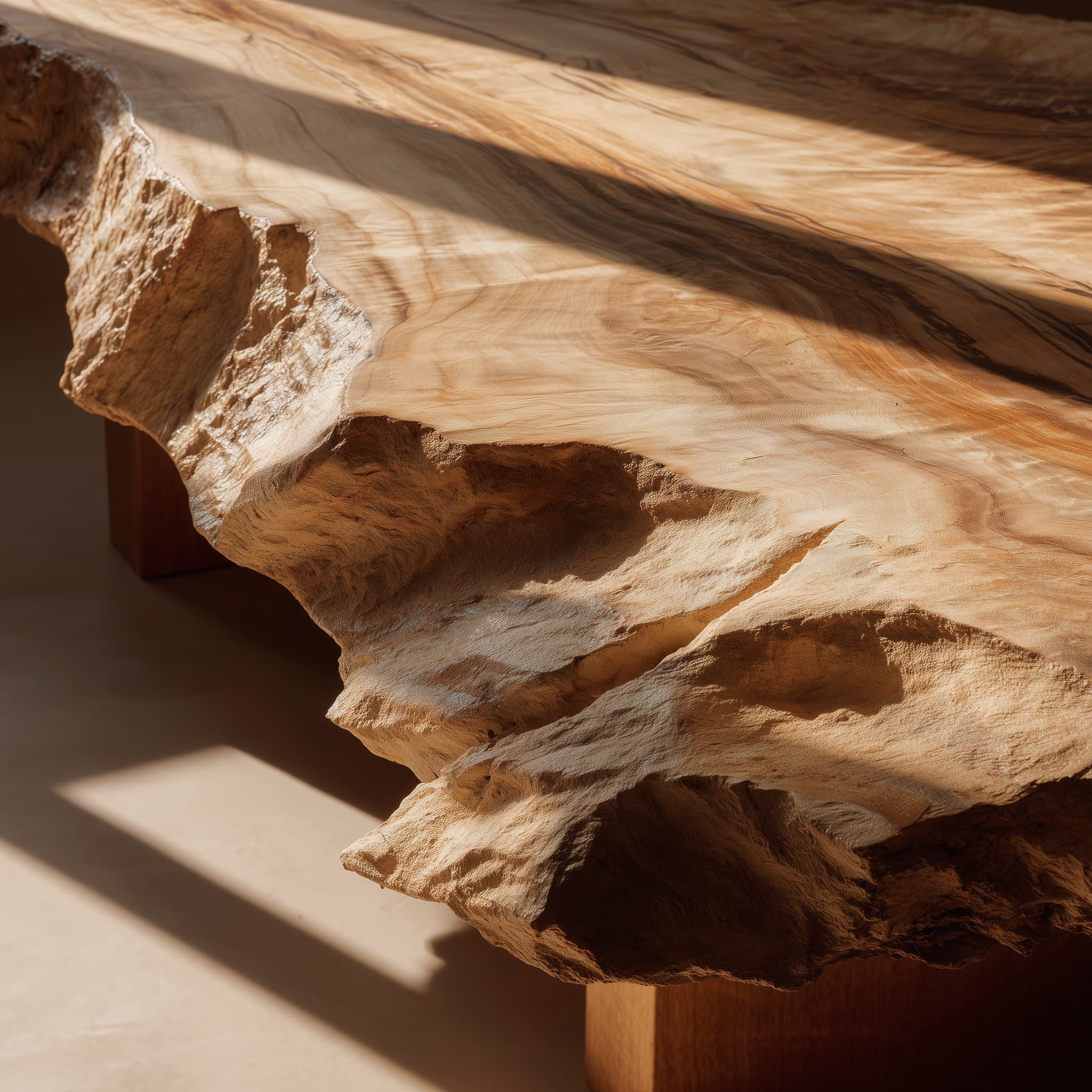
From Forest to Form: The Journey of a Slab
By
James Brown
—
December 15, 2025
Behind every handcrafted table lies a story of transformation — from raw forest wood to a sculptural centerpiece. The process blends patience, tradition, and an artist’s intuition.
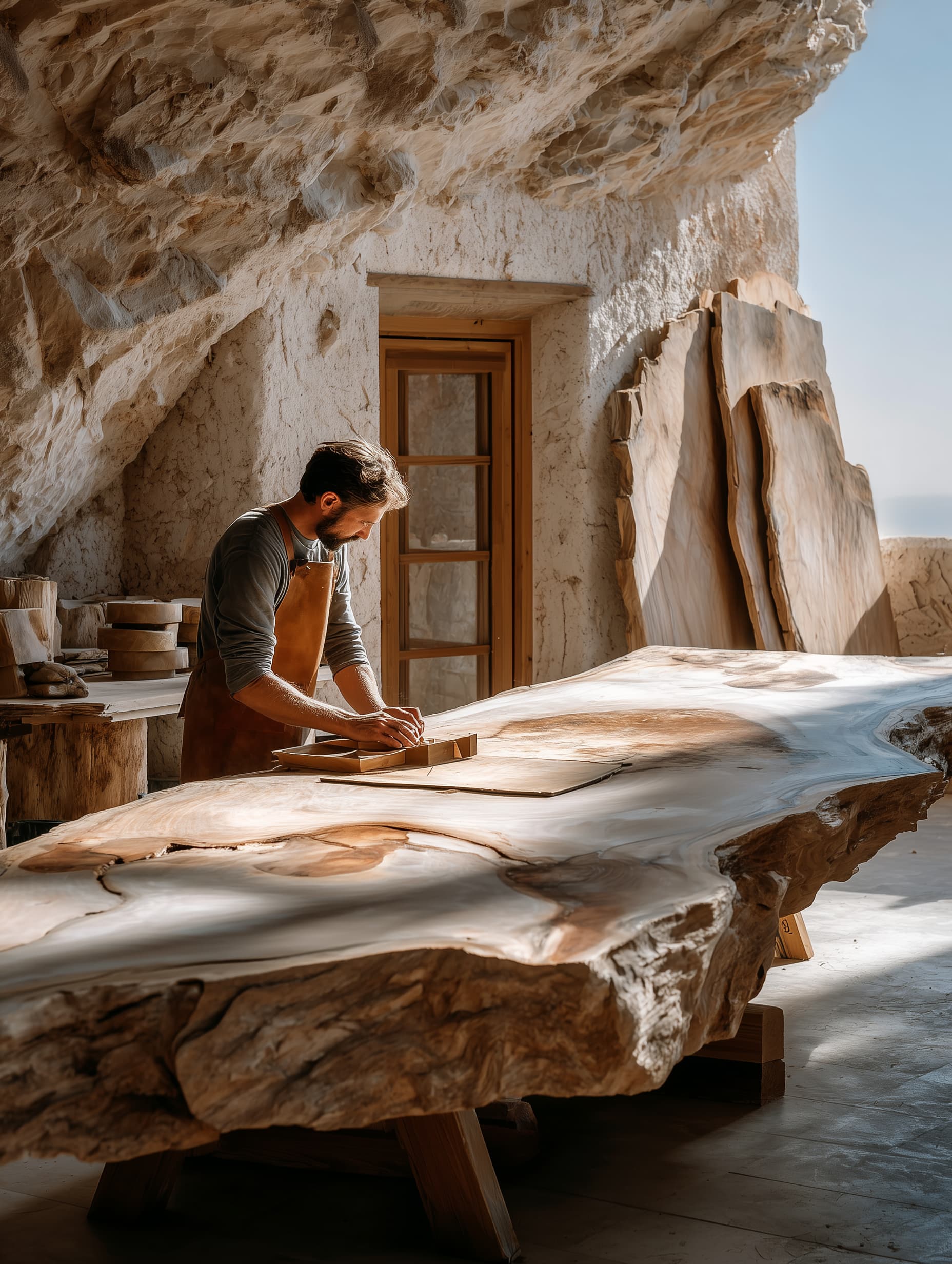
An artisan shaping a raw slab into its final form.
The journey begins long before the workshop. Selecting the right tree is an art itself — only mature, ethically sourced wood with distinctive grain patterns is chosen.
Once cut, the slabs rest for months, sometimes years, allowing nature to complete the drying process. This ensures strength, stability, and a rich patina that only time can create.
In the workshop, the wood is shaped, sanded, and treated by hand. Each surface is touched dozens of times, ensuring it feels as good as it looks. The result: a piece that connects craftsmanship, sustainability, and the soul of the forest.
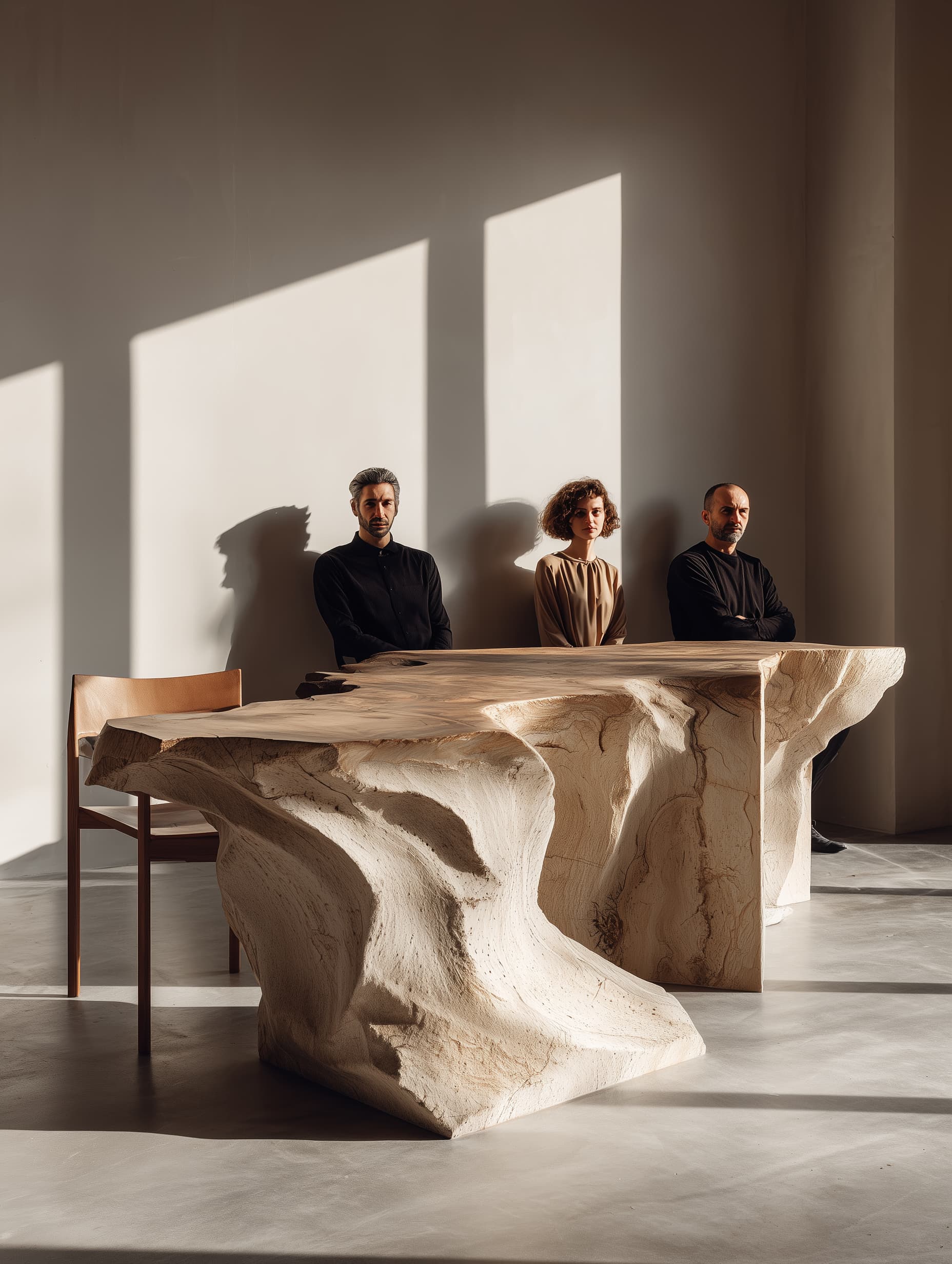
Our team of designers and craftsmen.
What follows is a careful process of refinement. Artisans study the natural edges, curves, and knots, deciding which elements to preserve and which to enhance. This stage is less about altering the wood and more about guiding its natural character into a functional form. Every decision — from stabilizing a split to choosing a finish — is made with longevity in mind.
Finishing a piece is a moment of quiet satisfaction. Oils or waxes are applied slowly, layer by layer, revealing depth and color that stayed hidden throughout the process. This final touch not only protects the surface but highlights the years of growth embedded within it. The completed piece becomes more than furniture — it becomes a lasting reminder of nature’s patience and the hands that shaped it.